
| FARM BUILDING “BIBLE” RE-LAUNCHED BY
RIDBA
An up-to-date edition of the agricultural buildings bible that
is a vital reference for farmers and estate managers considering
constructing or maintaining their structures is to be published
by the Rural and Industrial Design and Building Association (RIDBA).
The Farm Buildings Handbook is also aimed at contractors and designers
who may not have an in-depth knowledge of the particular requirements
of agricultural construction such as how much space to allow livestock
and how much waste stock produces.
RIDBA re-launched the handbook at the Agricultural Building
Show at Myerscough College in Lancashire in 2009. Reading it makes it apparent just how much things have changed since the book
was first published by MAFF in 1961.
Back then, there were grants towards the cost of constructing farm
buildings and so the quality of design and construction was controlled.
Now there are no grants, and as working farm buildings are not covered
by Building Control regulations, there is no third-party check on
their design and construction.
Back then, health and safety legislation was not as rigorous as
it is now – the total number of deaths at work reducing from
5.6% to 0.7% per 100,000 workers between 1961 and 2009, and a reduction
in construction accidents likely to show a similar trend.
Back then, it was accepted that building contractors were the experts
in building so their farmer clients were not expected to ensure
they were themselves competent in health and safety. Now, farmers
are partly responsible for the health and safety practices of the
contractors they employ.
And back then, the green issue was in its infancy. Now there are
strict regulations on environmental impacts such as slurry storage,
use and disposal, nitrates, the storage of chemicals, disposal of
dead stock and hazardous waste.
This latest RIDBA issue of the Farm Buildings Handbook will cover
all aspects of farm construction, from planning through to fit-out
of all types of buildings, under sections such as legislation and
regulations, construction technology, buildings for livestock production,
storage and other purposes, and buildings for diversification.
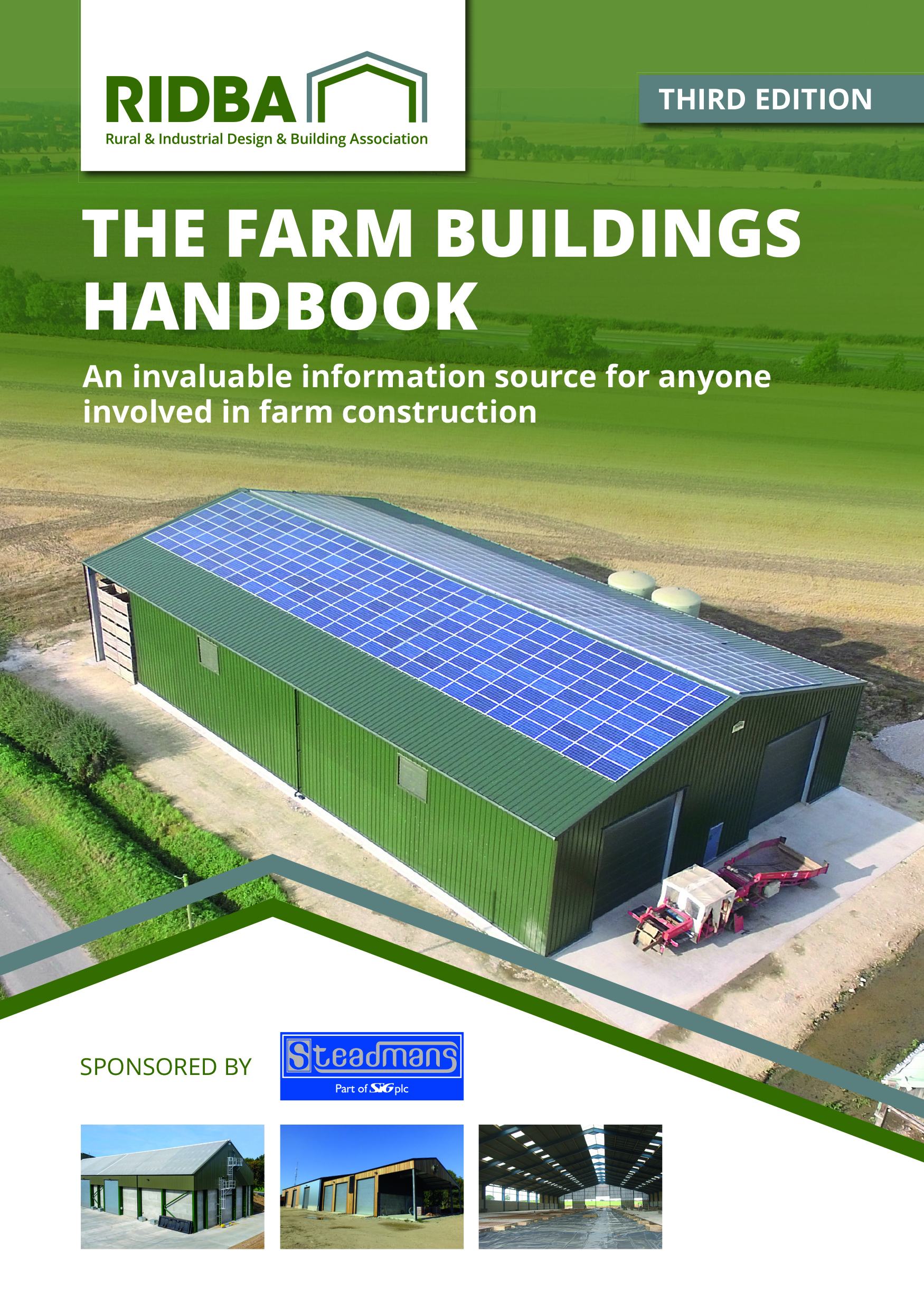
Contained within approximately 200 A5 pages, it is not intended
to be the-be-all-and-end-all for farm buildings, more a guide to
what needs to be considered, with informed pointers to where more
detailed information can be found.
For example, the planning system in the legislation and regulations
section advises farmers that they may be eligible for free planning
consultancy advice under the Rural Enterprise Scheme administered
by DEFRA.
|