Designing Steel Framed Buildings for Fire

Page-15-Technical-News

Introduction

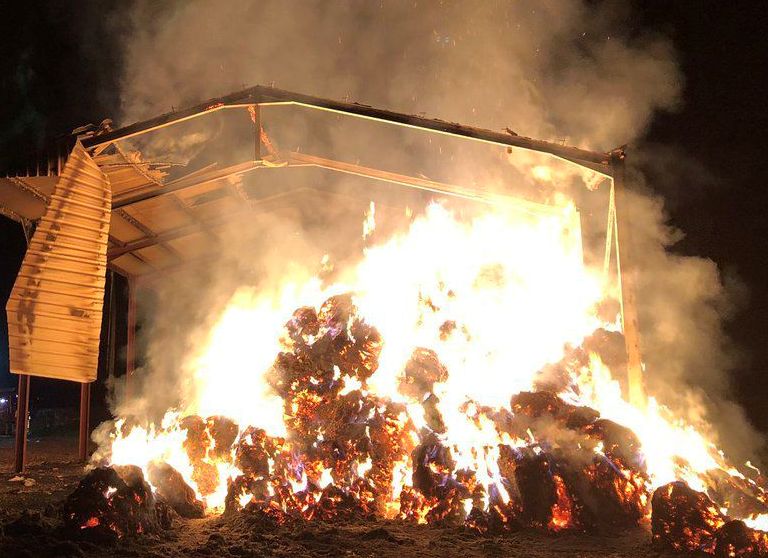
I’m writing this article on the 4th anniversary of the Grenfell Tower tragedy, an event that shocked the entire nation and shone a much-needed spotlight on the issue of fire safety in buildings. Of course, there are several significant differences between a highrise residential block and a single-storey agricultural building and many of the issues identified at Grenfell Tower do not apply to grain stores or animal housing. Nevertheless, fires do break out on farms, sometimes with tragic consequences, so it seemed timely to dedicate this article to the subject.

Regulations and fundamentals

As most readers will be aware, agricultural buildings that are not used as dwellings are exempt from the Building Regulations provided that they meet certain conditions. RIDBA members, however, also supply a wide range of non-agricultural buildings (e.g. buildings for industrial, retail or educational applications), so knowledge of the basic requirements of Approved Document B, the part of the Building Regulations in England and Wales dealing with fire, is important. Furthermore, farm buildings are sometimes built close to dwellings (e.g. a barn next to the farmhouse) or are converted for other uses (e.g. a riding school), so the Building Regulations exemptions don’t always apply. Fortunately, even when a single-storey building falls within the scope of Approved Document B, the rules are far less onerous than they are for multi-storey buildings.

There are two fundamental issues that need to be considered when designing a building against the risk of fire:
– Saving the lives of occupants within the building
– Preventing the spread of fire to neighbouring buildings.

The former is usually critical for multi-storey buildings, where there is an emphasis on preventing the spread of fire within the building (compartmentalisation), providing escape routes, the installation of sprinklers and preventing collapse of the structure by protecting critical structural elements. By contrast for single-storey buildings, the emphasis is very much on preventing the spread of fire to neighbouring buildings, in particular through the collapse of a burning building onto its neighbour.

Saving lives

The overriding priority of Approved Document B is saving the lives of building occupants in the event of a fire. This is achieved by a combination of minimising the time needed to egress from the building and maximising the time taken for the fire to spread. The former is enabled through the provision of escape routes leading to fire exits, while the latter is often achieved by the use of fire doors, fire-proof barriers, compartmentalisation and sprinklers. Since the majority of agricultural buildings are single storey, the simplest way of saving lives is to ensure that everyone within the building has easy access to an exit. For this reason, the exemption of agricultural buildings to the Building Regulations states that nowhere within the building may be further than 30m from an exit.

Preventing the spread of fire

Of greater concern for single storey buildings is the spread of fire to neighbouring buildings, especially where a neighbouring building is a dwelling. Preferably, agricultural buildings (i.e. those that are generally exempt from the Building Regulations) should be at least one and a half times their height from any building with sleeping accommodation. Where this is not possible, or for industrial or commercial buildings where there is no exemption from the regulations, it is necessary to design the building such that in the event of a fire. For braced frames, this could be achieved by protecting the external walls only (i.e. the columns and bracing), but this approach is inadequate for portal frames, because the columns and rafters act together as if they were a single structural element. For standard frames with nominally pinned bases, if the roof structure were to collapse in a fire, the walls would also collapse allowing the fire to spread. Of course, in theory, this problem could be overcome by applying fire protection to the entire portal frame.

However, applying fire protection to rafters is difficult and expensive so an alternative solution is needed. SCI publication Single Storey Steel Framed Buildings in Fire Boundary Conditions (SCI-P-313) presents an alternative method in which engineering principles are applied to the design of the columns and bases to demonstrate that the columns alone could withstand the overturning moment applied to them even if the entire roof structure were to collapse in a fire. In this method, the overturning moment at the point of rafter collapse is calculated for a special fire limit state case, in which the loading is less severe than that normally used to design the structure.

The column base strength and stiffness are estimated based on the actual base dimensions and thickness and the size and strength of the holding down bolts. Sprinklers are recognised to have a considerable beneficial impact on the intensity and spread of fire and a significant relaxation in the rules is permitted when they are used.

Fire protection

Where columns along external walls require fire protection, this should extend up to the underside of the haunch, or to the rafter where there is no haunch. The level of fire resistance of the protected columns should be the same as that of the wall. Values of fire resistance (i.e. duration in minutes) are given in Approved Document B. Building designers and frame manufacturers have several options when it comes to the means of fire protection. The most common are summarised (right).

Boards – This is probably the simplest solution and is especially suitable for commercial and retail premises, where the boards provide the additional benefit of hiding the steelwork within a neat box. The boards are fitted as a dry trade after the completion of the structure, so do not interfere too much with the construction programme.
Sprays – This solution is less common in the UK, but is sometimes used where complex shapes would be difficult to protect using boards. The end result, while effective as fire protection, is not aesthetically pleasing, so sprays are not used where appearance is important. Spays are messy to apply and no other construction work is possible during this operation.
Blankets – This solution combines the advantages of boards and sprays. In common with boards, blankets are applied as a dry trade to the completed structure, but like sprays they are suitable for complex shapes. They are especially useful for protecting truss structures, since the blankets can be wrapped around the individual elements of the truss.
Intumescent coatings – Unlike the first three options, which all offer passive fire protection, intumescent coating react to temperature, foaming up to provide fire protection in the event of a fire, but otherwise resembling a painted finish to the steel.

Intumescent coatings can either be thin or thick film and may be applied in the frame manufacturer’s workshop or on site. Off-site applied thin film intumescent coatings are probably the most appropriate for portal frame structures and have a significant market share in the UK.


 

Stress, Design & Livestock

Page-7-RIDBA-News-scaled

Stress is normal, and animals have evolved coping mechanisms that allow them to mitigate ‘normal’ pressures. The problem with stress is not its presence, but the duration. Our livestock systems have slowly evolved to manage the stress factors, and there is still progress to be made. The article below is a summary of a presentation made at the RIDBA AGM earlier this year.

Space

The understanding of stocking density, whether for eating, drinking or lying down has increased steadily, and there is guidance on space per type and/or weight of animal from AHDB and RIDBA. The restriction of this approach is that it ignores the quality of space, so that for example the feeding or lying space at the ends of cattle buildings can be seen as low quality by livestock in wet and windy conditions, or the best possible locations during summer daytimes.


Temperature

The basic understanding of the impact of air temperature on livestock was established in the 1970s and 1980s, with the idea of the thermal neutral zone (TNZ) of temperatures which did not cause an animal to either change behaviour or burn more/less energy to mitigate the impact of temperature. Animals within their TNZ have zero thermal stress. The pig and poultry sectors created building systems that recognised the cost in terms of inefficiencies and stresses of keeping animals outside their TNZ, and created controlled environment buildings. These changes sometimes and still do create other, new problems, but the thermal aspect was recognised. This has not taken place in the cattle sector, where there are large, significant and global benefits to be had for appreciating the TNZ of very young cattle. A potential role for the UK building sector is to push the status quo on youngstock building design, as discussed in the last RIDBA journal. There is also a need to realise the impact of heat stress (HS) created under typical UK conditions. The list below outlines current scientific understanding of the impact of heat stress on calves and heifers.


– Dry matter intake and growth rate reduced
– Elevated blood insulin and protein catabolism
– Accelerated respiration rate and loss of CO2
– Altered blood-based chemistry and respiratory alkalosis
– Altered rumen activity and microbiota affects feed digestibility and rumen fermentation
– Decreased luteinising hormone, oestradiol and gonadotrophins disturb normal oestrus activity, depress follicular development, hence reduced conception rates
– Prenatal HS suppresses embryonic development via hypoxia and malnutrition
– Pre and peri-natal HS impacts on the growth, immunity and future production of newborn calves.

Wang et al (2020) Journal of Animal Science and Biotechnology. Heat
stress on calves and heifers: a review.

Heat stress may sound unlikely under UK conditions, but will be taking place around 20oC, and lower during weather periods or in buildings with high relative humidity (>80%). There are increasing numbers of dairy cattle being housed all year round, with many benefits, but heat stress is being ignored by the status quo of building. The front cover of a leading building journal recently displayed an aerial view of a newbuild 600 cow plus diary unit, which a cursory examination of the image and reference to the RIDBA Farm Buildings Handbook shows has roof ventilation capacity of <25% of requirement. We need to get better at this type of detail, and explain to the client that in this case an additional £11-15k of capital on ridge vent design is likely to increase yields by 3% a year and reduce mastitis cases by 10%.


Thermal dynamics


Livestock production is an energy based business. Put animals in a
building and we can describe a lot of activity inside that built system
in terms of energy dynamics; thermal dynamics. Thermal dynamics
in a livestock building can be influenced by:
– Stocking density
– Level of nutrition
– Floor design and construction
– Drainage competence
– Bedding materials
– Building cladding U values
– Construction quality
– Ventilation system.

All factors listed above are within the influence of the building sector, albeit that a client may choose to make a different choice from one promoted by best practice and design. During the RIDBA AGM one of the members asked whether the livestock building design process included consideration of building U values, as it is in industrial new builds. This made me smile, and is hopefully part of the future, because although the answer (except for the pig and poultry sector) is “no, it is not”, it should be, and it will be. It is a good example of how the progressive end of the building sector will help UK agriculture.


The one specific example given at the RIDBA AGM on building design factors that can contribute to livestock health and productivity related to Infectious Bovine Rhinotracheitis, (IBR), a lingering chronic respiratory infection that appeared in the 1960s and has crept through UK cattle herds in spite of widespread vaccination. Examination of the critical control points on dairy units which can contribute to thermal stress on cattle and both reduce immune competence and support the transmission of the virus produced a simple building design checklist:


– Roof slope
– U value of roof cladding
– Natural ventilation design
– Solar gain
– Air speed
– Moisture management detail.

Moisture management is not directly quantifiable, but all the others are, or can be directly measured. The pig and poultry sector have evolved building systems that have mostly produced ‘controlled environment’ buildings, and 30 years ago at R&D level buildings were designed including all of the factors in the list above. However, intelligent design does not always create optimum buildings, and animal health and welfare can still be found below target in pig and poultry buildings for predictable reasons. The first reason is the reality of decision-making, whereby material and construction costs drive choice towards short-term gains that are long-term compromises. We need to get better at explaining the long-term compromises. The second is construction quality, particularly around air tightness of panel structures, and the third is the understanding and maintenance requirements of building components by the user. Livestock production can produce a very demanding physical and chemical environment. A study of environmental factors in commercial UK pig facilities in 2020 found that successful management of a chronic respiratory issue included robust maintenance and hygiene practices, and was in no way related to building age.


Moisture

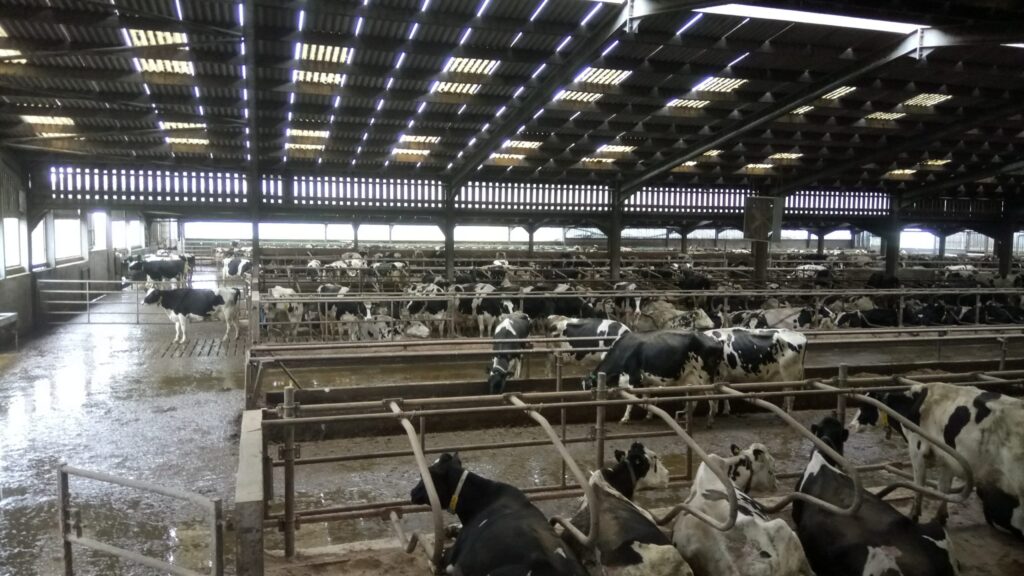
Moisture management is a key aspect of livestock systems. Livestock buildings process tonnes of moisture per day, before we pay attention to rainfall, and loss of control of the ins and outs of water has a direct association with animal health and production efficiency. Access to water, water quality, water flow rates and the other side of the equation, management of urine, faeces and dirty water, all matter and impact on animal health. The targets are unfettered individual animal access to good quality water above a minimum flow rate, and waste disposal that does not significantly increase environmental moisture levels in the building. Animals lie down for 12-17 hours a day, so a dry bed is an absolute target, as is a period of dryness after washing out and cleaning a livestock space. The latter is not easy in the middle of winter in the UK climate, but is made easier by correct design of facilities.

There are many aspects of building design that impact on animal health and productivity, but space, quality of space, an appreciation of temperature, moisture and thermal dynamics are all vital aspects that need consideration from the start. There will be stress on livestock in our systems, so we should design to mitigate duration of stress, and acquire the benefits of doing so.